
Waipahu homes built before the 1980s often have narrow attics and single-wall construction that make duct routing and return-air sizing more complex than in newer subdivisions. We measure existing chases at Waikele Center-area properties and Royal Kunia tract homes to avoid compressing insulation or blocking trade-wind cross-ventilation that residents still rely on during shoulder seasons.
High coastal humidity accelerates coil corrosion and condensate overflow. We specify coated coils and oversized drain lines sloped at least 1/4 inch per foot, then tie them into the home's existing scupper system rather than running new PVC that can clog with red dirt common in Waipahu. This detail prevents ceiling stains that appear weeks after install in Honolulu County.
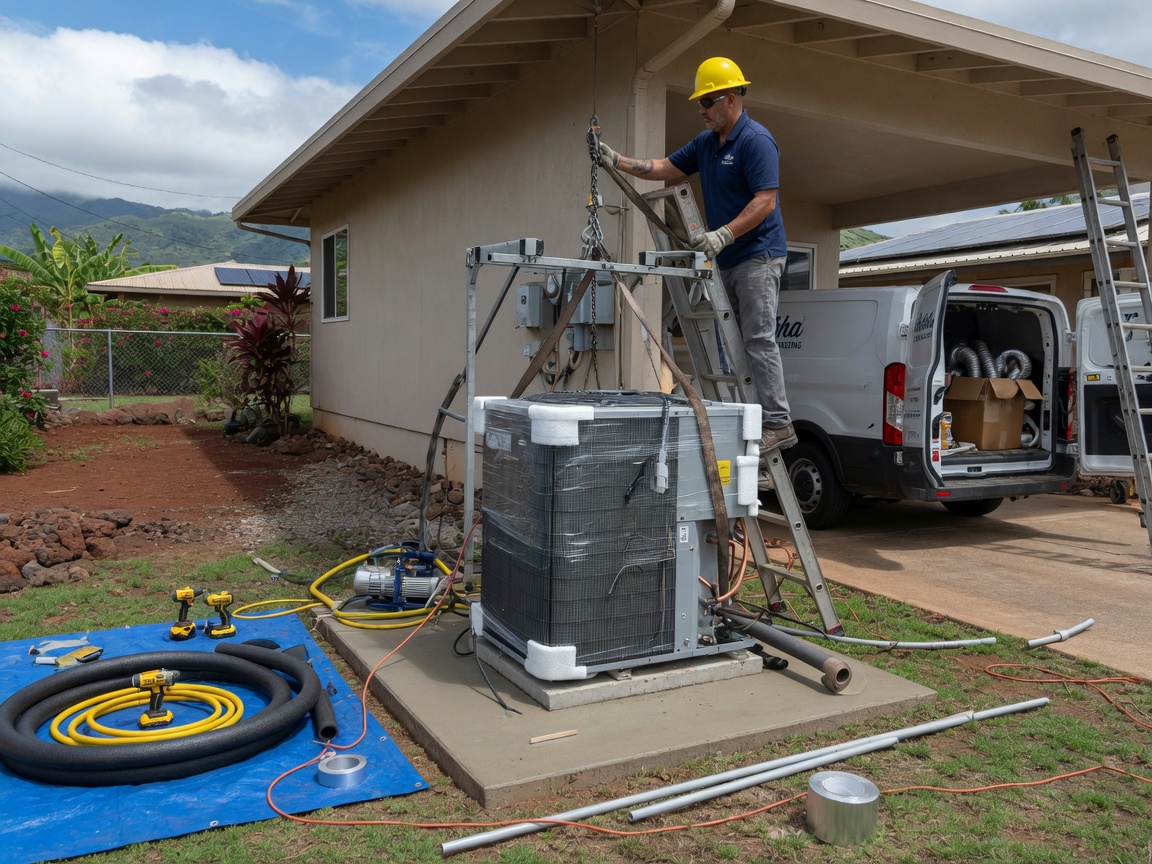
Trade winds gusting between the Waipahu Cultural Garden Park and Hawaii Plantation Village can push hot air back into condenser coils if units are placed on the leeward side. We locate pads on the windward elevation and secure them with hurricane straps rated for 130 mph, a step required by current Honolulu County amendments even though the code is not always enforced on smaller jobs.
Load calculations must account for the fact that most Waipahu residences run the system 18–20 hours a day. Oversized units short-cycle and fail to dehumidify; we right-size to 1 ton per 500–600 sq ft of conditioned space after subtracting the passive cooling already provided by the prevailing trades.
Technician insight
In Waipahu the thing that catches most people out with Central AC Installation is the single-wall construction and narrow attics; you cannot just drop flex in like you do in Mililani tract homes because the return air path gets choked and the system never dehumidifies properly.
Waikele two-story with blocked returns
Homeowner called after the old central unit short-cycled constantly. We found the original flex returns crushed against the single-wall framing. We rerouted rigid ducts through the existing chase, upsized the return, and placed the new condenser on the windward side with proper strapping. The system now runs longer cycles and keeps indoor humidity under 55 percent even when trades are light.
Central AC Installation Services We Offer
✓Ductwork Design and Installation
Custom sheet-metal or flex runs sized for older Waipahu single-wall homes so every room in Waikele and Royal Kunia receives balanced airflow without new soffits.
✓High-Efficiency Condenser Placement
Pad location and wind-rated anchoring that accounts for trade-wind direction and salt air exposure typical along the Ewa Beach corridor.
✓Thermostat and Zoning Integration
Multi-zone controls added during install so families in two-story Royal Kunia homes can cool only occupied floors and reduce runtime in constant humidity.
✓Condensate Management Upgrade
Oversized, sloped drains with cleanouts tied into existing scuppers to handle the heavy daily condensate load created by Waipahu's tropical climate.
✓Attic Insulation and Sealing
R-30 batts plus mastic sealing of all new penetrations so central systems in pre-1990 Waipahu homes do not pull hot attic air through the ductwork.
Central AC Installation Cost in Waipahu, HI
| Service | Typical Range | What Affects It |
|---|---|---|
| Standard 3-ton central system install | $5,800–$8,200 | Includes basic duct tie-ins; rises with new line sets or panel upgrades common in 1970s Waipahu homes. |
| Ductwork modifications only | $1,400–$3,100 | Attic access and single-wall construction add time in older Honolulu County properties. |
| Condenser relocation with new pad | $900–$1,600 | Required when existing pad sits on leeward side exposed to trade winds. |
Ranges are typical for Waipahu, HI and confirmed with an exact written quote before any work starts.
How it works
- 1
Site Assessment
We inspect attic access, existing duct chases, and electrical service at your Waipahu, Waikele, or Royal Kunia address and note trade-wind exposure.
- 2
Load Calculation And Equipment Selection
Manual J run using actual insulation values and window orientation, then match to units that handle continuous humidity without short-cycling.
- 3
Duct And Pad Preparation
Install new trunks or modify existing runs, pour or reinforce the condenser pad with hurricane tie-downs on the correct windward side.
- 4
Final Connection And Commissioning
Leak-test lines, charge to spec, verify condensate flow, balance dampers, and set up the thermostat for local conditions.
Pricing
Upfront written quote after on-site inspection; final price set by home size, duct access, and any required electrical upgrades.